ACTS church planting training reached its final stage
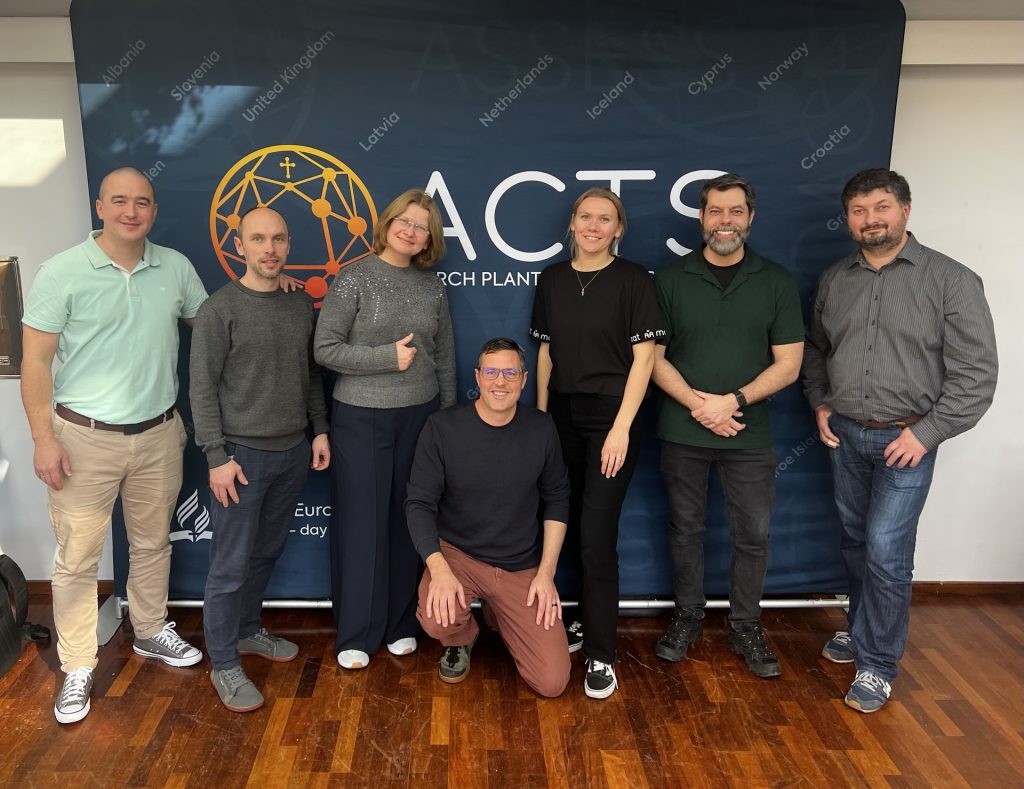
In July 2024, the ACTS training program for church planters from various European countries began in Tallinn, and it concluded with a module held in Greece from December 15 to 17. This group included church planters from the Baltic countries, Greece, and Poland. Estonia was represented by six groups: Aleksandr Tsugai (Pärli), Aleksandr Glamozdinov (Narva), Marge Randlepp (TISDAC), Meeri Pajula (Kuressaare), Priit Keel (Viljandi), and Daniel Meder (Kompass, union missionary).
Looking back on the ACTS training, Aleksandr Tsugai, chairman of the union and one of the leaders of the Pärli congregation, said that it was on April 1, 2023, when Anthony Wagener-Smith, then head of the Trans-European Division (TED) mission, visited Estonia. “That’s when the Pärli group started operating,” Aleksandr recalled. “At the time, it was the only group that was ready, and since then, over the course of two years, six people have come forward who are interested in establishing a church and who have now completed the training from start to finish.”
Now that the four-module journey has been completed, the goal is first to put what has been learned into practice and, at the same time, to share the knowledge and experience gained with young people. “We are bringing together young people from Estonia, Latvia, and Lithuania and will also conduct our ACTS for them, which consists of four modules,” said Aleksandr, adding that all interested parties will be invited to the first meeting, and from there, they will see how the work develops. The first module will take place in Latvia from April 24 to 26, with the exact location to be determined in due course.
In addition to participating in the training, Aleksandr also considers the time spent together by the Estonian group to be important. “During the previous module in Riga, we decided not to stay in a hotel, but to rent an apartment instead – it was a wonderful experience to spend time together, cook together, play games, and pray. We did the same in Greece. It’s good to discuss things with each other and support each other.”
Priit, who has also completed the entire journey, said that it’s great that we have people who are interested in establishing congregations. “This program is designed to inspire these people. It encourages them and, in a sense, pushes them forward—this training also covers the topic of coaching, so you are not alone.” Priit mentioned that the initial idea of establishing a new congregation did not go well, and now the idea is slowly moving towards re-establishing the congregation. “But that’s still a topic for the future.”
The reestablishment of the congregation in Kuressaare is already underway, and Meeri Pajula, the elder of this congregation, said that although reestablishing a congregation is a different process than establishing one, the challenges are quite similar. “Although everyone does their own thing, the problems and journeys are in a sense the same; I don’t feel that I was very different from the others in the training.” Meeri found the training experience enjoyable and emphasized that it is important to hear about the experiences of others. “We met with church planters from all over Europe, and it was great to find out how others are doing and how churches are being established in different cultures. Culture makes the whole process different from what we are used to here. It was inspiring to see people at work.”
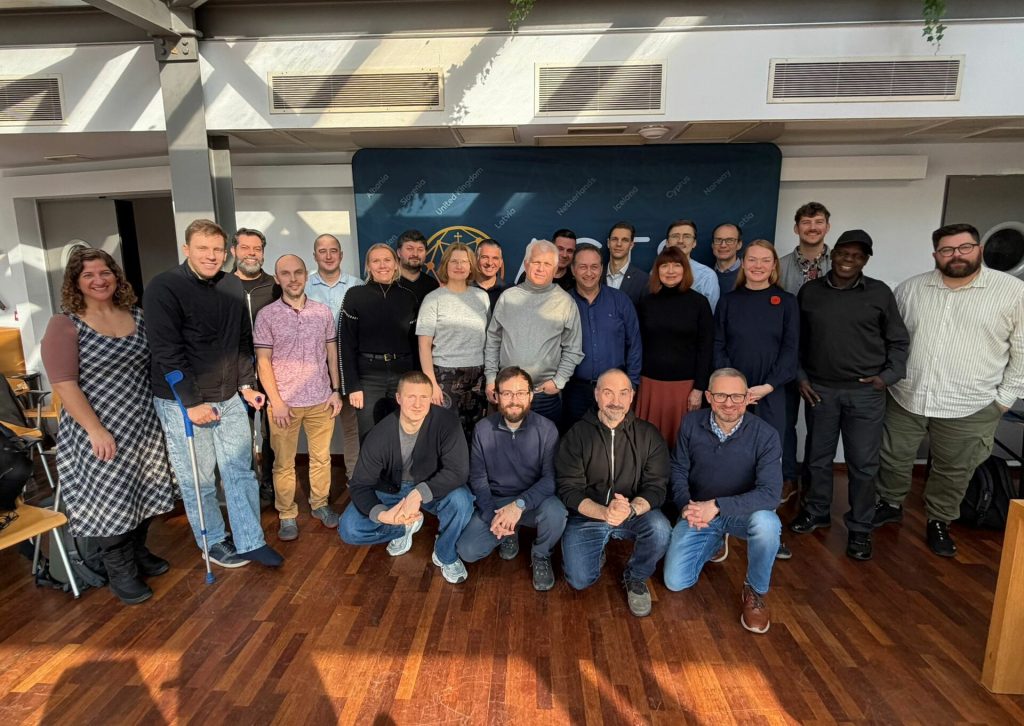
The process of rebuilding the Kuressaare congregation is currently at the stage where the structure of the congregation will be reviewed at the beginning of the new year. “We will look at what kind of people and talents we have, with whom and with what we can carry on the mission of the congregation. Once we have that in place, we can really start to live out the mission and vision of our congregation.”
Pastor Marge Randlepp of our union’s international group TISDAC (Tallinn International Seventh-Day Adventist Church) joined ACTS in the second module, and after the last module of the training, TISDAC is now considering organizing itself into a small congregation. “We are waiting for the membership letters of those who have decided that they want to be members of TISDAC. In addition, we currently have a baptism class with a person who wants to be baptized and who has not had any previous contact with our church. If the letters arrive within the first three months of next year, we will be able to register as a small congregation.”
Marge said that this time the course was meant to give an overview of what has been done so far, and that TISDAC is very close to its goal. “This time we also reviewed the principles of church planting. “We are not establishing a congregation so that the project can be completed, but so that the congregation can think ahead to establishing the next congregation—a congregation is meant to give birth to new congregations. This time, we had Ivo Käsk as our guest, who spoke about organizing worship services as part of his doctoral thesis – what it means, what an inclusive worship service is like,” Marge explained, adding that it was also interesting to hear from a US pastor who currently lives with his family in a Danish city where there are no Adventist congregations and where he is trying to establish one. “The only Adventists in that city are his family, and he talked about how to conduct a service when the audience includes, for example, a yoga teacher, a believer in conspiracy theories, and an atheist – how to address everyone at once.”
Margele was particularly moved by the joint prayer. “Every time, we prayed together and interceded for all the groups in all countries, but this time, hands were laid on all the groups, and those who wished received anointing, which has never been done to me personally. It was empowering and gave me the motivation to move forward.”
Aleksandr Glamozdinov, who moved from Jõhvi to Narva with the aim of establishing a congregation, said that the knowledge gained from ACTS now needs to be put into practice and passed on to the next generation. “We have completed our training and now we must put it into practice and pass it on to the next generation. ACTS exists to give the congregation a new vision and develop its organization—so that every congregation can become a mother church.”
In Narva, the current goal is to reestablish the congregation. “If everything works out and we have new leaders emerge, then maybe we will go down the path of a new small congregation, but maybe we will go down the path of establishing a new congregation. Right now, we are in the initial phase of reestablishing the congregation.”
Summing up the ACTS journey, Aleksandr Tsugai said that they may participate in ACTS again in the future. “Those who have completed the course are encouraged to participate in the future as well—the purpose of this training is not only to teach, but also to create a network of people who have a common goal, who offer prayer and other support; this is the ACTS family.” Previously, Anthony Wagener-Smith led the establishment of congregations in our division, but after the summer working meeting of the General Conference, Pastor Sylvia Mendez was elected to this position at TED, and she was welcomed in Greece this time. “We welcomed Sylvia and said goodbye to Anthony, who worked in our division for four years and thanks to whom there is not a single country in our division that is not talking about church planting,” said Aleksandr, adding that as the General Conference prepares for the 2027 project One Voice (OneVoice27), “Anthony brought a unified mindset to the idea of church planting, and in that sense, OneVoice is already present in the Trans-European Division.”